Description
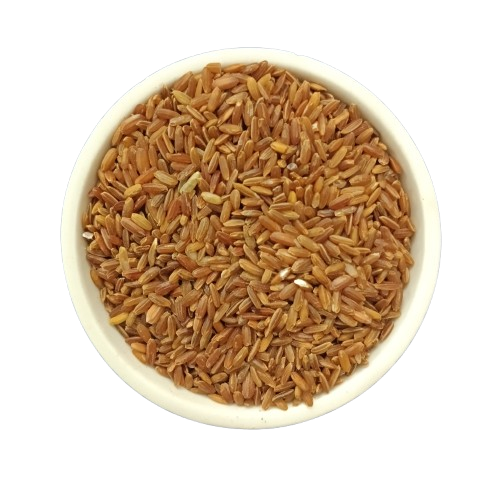
Rakthashali Rice / Red Healing RiceRakthashali Rice is one of the most ancient and medicinal rice varieties mentioned in Ayurveda. The name Rakthashali itself comes from two Sanskrit words – Raktha meaning blood and Shali meaning rice, indicating its traditional use in improving blood quality and vitality. This rice is native to the Indian subcontinent and has been cultivated for centuries in parts of South India, especially in regions that followed traditional organic and natural farming practices.
Rakthashali Rice is classified as a therapeutic rice and was traditionally used as a food during recovery from illnesses, post-delivery care, and for people with weakened digestion. Unlike modern polished rice varieties, Rakthashali Rice retains its natural red bran layer, which gives it a distinct earthy aroma and a slightly firm texture after cooking. Once cooked, the rice turns deep reddish-brown and carries a naturally wholesome flavour.
Ancient Ayurvedic texts describe Rakthashali Rice as pathya aharam – a suitable and nourishing food that supports long-term health when consumed regularly in moderate quantities.
Cultivation of Rakthashali Rice
Rakthashali Rice requires warm tropical climatic conditions with adequate rainfall and fertile soil rich in organic matter. It is traditionally grown during the monsoon season and follows natural water-fed cultivation methods. The crop duration ranges between 120 to 150 days, depending on soil and climatic conditions.
This rice variety thrives best when cultivated using indigenous farming knowledge, where chemical fertilizers and pesticides are avoided. Farmers rely on cow-based inputs, green manure, and natural pest management techniques. Rakthashali Rice is not a high-yield variety, which makes its cultivation demanding and less commercially attractive. However, farmers who continue to grow it do so to preserve its medicinal value and heritage significance.
Benefits of Rakthashali Rice
Improves blood quality & strength
Rakthashali Rice has been traditionally recommended to improve haemoglobin levels and support healthy blood circulation. It is often suggested for people recovering from weakness and fatigue.
Supports digestion & gut health
This rice is light on the stomach when properly cooked and helps strengthen the digestive fire (Agni). It is suitable for people with sensitive digestion.
Balances body heat
Rakthashali Rice is known for its cooling and balancing nature, making it suitable for individuals with excess body heat, acidity, or inflammation.
Strengthens immunity
Being unpolished and naturally rich in micronutrients, it helps improve immunity and overall vitality.
Helpful during recovery & convalescence
Traditionally given to people after illness, surgeries, or childbirth, as it provides nourishment without burdening the digestive system.
Supports joint & muscle health
Ayurvedic usage suggests Rakthashali Rice helps reduce inflammation and supports muscle recovery.
Best Buy Strategy
Rakthashali Rice is a heritage medicinal rice, so quality selection is crucial. Always look for rice that has a natural red to reddish-brown colour, free from artificial polishing. The grains should have a mild earthy aroma and must be free from fungal growth or moisture.
Since this rice is traditionally processed and minimally handled, it is advisable not to store it for very long periods. Purchase in small quantities and use fresh stock for maximum nutritional benefits.
Nutrients of Rakthashali Rice
A ¼ cup of uncooked Rakthashali Rice (which becomes approximately ½ cup after cooking) contains:
Calories: ~160–170
Carbohydrates: ~35–38 g
Protein: ~4–5 g
Fiber: ~3–4 g
Iron: Naturally occurring
Minerals: Magnesium, Zinc, Phosphorus
Sodium: Very low
(Values may vary based on soil and cultivation practices.)
Storage of Rakthashali Rice
Uncooked Rakthashali Rice should be stored in a dry, airtight container away from moisture and sunlight. It can be safely stored in a pantry for up to 6 months. For longer storage, refrigeration or freezer storage is recommended.
Cooked rice can be stored in an airtight container in the refrigerator and consumed within 2–3 days to retain freshness and taste.
Extensive Cultivation In
South India (traditional pockets)
Karnataka
Tamil Nadu
Parts of Andhra Pradesh & Kerala
(Cultivated in limited quantities due to its medicinal and non-commercial nature.)
How to Eat Rakthashali Rice
Rakthashali Rice is best consumed in a simple and sattvic form to experience its full benefits. It pairs well with vegetable curries, keerai masiyal, rasam, or plain curd.
Use Pressure Cooker
Wash the rice thoroughly and soak for 4–6 hours.
Use 1:2 water ratio.
Pressure cook for 3–4 whistles and allow natural release.
The rice should be soft yet separate.
Use Open Pot Method
Soak the rice for 6 hours.
Cook in excess water until the grains turn soft.
Drain excess water and serve warm.
Dishes Made with Rakthashali Rice
Plain steamed rice with rasam
Medicinal rice kanji
Curd rice (for digestion)
Soft vegetable khichdi
Post-illness recovery meals